Showing posts with label Reviews. Show all posts

Wednesday, June 11, 2014

A Life in Balance (A TOS Review)

If you have a child who is struggling with learning, I highly recommend that you read the book, 
A Life in Balance: Discovery of a Learning Breakthrough by Learning Breakthrough Program. The Learning Breakthrough Program is an alternative to medication for the treatment of dyslexia, ADHD, and other issues which interfere with learning ability. The people behind developing this program- the methods and tools- have research to back up improvements in reading and concentration without the use of drugs.

In this post, I'm going to share a bit with you about our family's experiences in using some of the Learning Breakthrough Program products and methods
with Song Bird. As a part of the TOS Review  Crew, I received a PDF download of the Life in Balance book in exchange for my honest review. I have not, however, received any of the products. What I share in this post about our experience is through a Brain Power course our daughter is taking via a university we go through.


Before I continue, I want to let you know that this book is for parents who desire a way to aid their children who have struggles with attention and learning. It gives background information about Frank Belgau's journey to helping people of all ages with learning issues. It explains how it is an ADHD alternative treatment as well as a solution for Dyslexia treatment. It's a brain fitness program which offers brain training to help with reading improvement, concentration, etc. This includes the elderly who start to have a decline in their sensory and neural systems due to degeneration. In addition, high-level Navy pilots have used this program as a part of their vision training. It also gives insight into understanding how and why these methods work to improve cognition. 


How I Used This Book In Our Homeschool


Song Bird is actually going through a Brain Power program that utilizes much of Learning Breakthrough's aspects. I want to respect my daughter's privacy, so I will not go into specifics about what she is personally going through. That is her story to tell if she chooses to at some point in her life.

She began with an evaluation that tested her in 12 different areas. This gave us information on where her strengths and weaknesses are. Essentially, learning issues happen when the left hemisphere and the right hemisphere are not communicating very well with each other. The exercises that Frank Belgau talks about in his book are to help make new neural connections in the brain so that the two hemispheres are working more cohesively. 

Reading his book has helped me to better understand the process that it took in research, development, and also the why and how of the methods used. 

I also feel greatly encouraged by the positive reminders I find throughout the book. We are indeed fearfully and wonderfully made! It's amazing how the brain can be rewired! It's disheartening for us parents when we see that our child is frustrated because he/she isn't learning. And it can become discouraging for us parents as well. But, there is hope! 


One of the key products Frank has developed is the Balance Platform. Song Bird isn't using the balance board yet... she needs to advance in skill and ability before she is able to. However, one of our other children who went through the same program (using some of Learning Breakthrough's products) helped our child greatly. We expect benefits for Song Bird as well.   


Juggling is one of many exercises that helps develop the function of the brain. *The Learning Breakthrough Program has students use different colored bean bags with different weights. The university's Brain Power program we are involved with is not doing this! (The only reason one of Song Bird's bean bags is a different color is because the third blue one was misplaced and orange was the color that was on hand.) And it makes so much more sense for students to do so. This exercise helps to improve vision because it promotes the muscular structures which are responsible for tracking.


Also, the ball and stick is a beneficial exercise.  Frank explains that, "The pendulum expresses some of the most basic principles of the physical universe. It is calibrated to the acceleration of gravity; it always responds according to the force that is exerted on it; and an individual's ability to control its motion precisely is both a gauge and an exercise of his relationship to three-dimensional space." ~A Life in Balance, p. 119

You see, the way the instructor can tell if a student is making progress, is by gauging how well they master a skill set. Once they do this, they are given another skill set to master... and so they continue until the they can display strengths where there once were weaknesses. 

What A Life in Balance Covers


The book covers Frank's family background (it's an important backdrop); his teaching career; his research based on working with students with varying learning abilities; challenges and victories as he developed the program and tools; details about the tools and how they benefit students; the development and function of the brain... and how it can be strengthened. 

What You Need to Know


These methods have helped our children. The thing is that parents and children need to stick with the exercises. And, in our case, we meet once weekly with an instructor who tests her. When the instructor sees that Song Bird has improved and mastered a skill set, Song Bird is given another exercise to practice.

Our children are individuals (no surprise) so their needs and personal areas for improvement are different. Song Bird is improving for who she is. Just like her sibling did for who they are. Individual progress in a program does not mean they will never be challenged or have difficulty understanding something, but it gives them the ability to have stronger mental acuity and personal improvements on areas of weakness. 


How Much the Life in Balance Book Costs


The paper back book of A Life in Balance costs $16.94.  

Connect With Learning Breakthrough!


Facebook: https://www.facebook.com/LearningBreakthrough
Twitter: https://twitter.com/LearningBreak
YouTube: https://www.youtube.com/user/LearningBreakthrough


Read other reviews by TOS Crew members about Learning Breakthrough's book by clicking on the banner below.

http://schoolhousereviewcrew.com/learning-breakthrough-program-review/


If your child is struggling in areas, I hope you consider using the Learning Breakthrough Program.


Blessings,


Wednesday, June 4, 2014

The Courage of Sarah Noble and The Door in the Wall (A Progeny Press Review)

In our family, we love to read. We have readers of all different levels, and while the kids get some daily reading in, I often times read out loud to my family a lot. This affords us many adventures together. In addition, we like to discuss and analyze literature. We have had the privilege of reviewing a couple of literature guides from Progeny Press: one for The Courage of Sarah Noble and one for The Door in the Wall.


The Courage of Sarah Noble

The book and literature guide is geared toward lower elementary children (grades K-3).  


We have owned both of these books for quite a while (the books do not come with the purchase of the literature guide). The Courage of Sarah Noble literature guide is for lower elementary. Which is perfect timing for us because Explorer and Dreamer had not yet heard this story. This study guide corresponds with the book written by Alice Dalgliesch. 

The Courage of Sarah Noble is set in 1707 and is based on a true story. This is a story about courage, loyalty, a love for family and home, friendship, and of course adventure. Sarah Noble travels afar with her father so she may be of help to him as he builds his family a new home. Through trials and fears, Sarah often recalls the encouraging words and instruction her mother gave her before leaving to, "Keep up your courage... Keep up your courage, Sarah Noble!" This helps her to work through scary aspects (especially frightful tales of Indians). She soon learns that some Indians are indeed friends, and she remains with them when her father returns to gather the rest of the family and bring them home. Do things really turn out all right for Sarah and her family? Do they become reunited?

This is a short story and the literature guide contains 38 pages consisting of pre-reading questions, discussion questions to help analyze the story, vocabulary, reading comprehension, and some references the Bible to go through as we make our way through the guide. In addition, there are some suggested optional fun activities to along with the story.

The Door in the Wall


The book and literature guide is geared toward upper elementary children (grades 3-5).  


Now, this one I hadn't read to any of the children before. So, even Scientist, Artsy Girl, Explorer and Dreamer listened in as I read out loud to Song Bird. :-)

Knighthood awaits Robin (son of the knight, Sir Jon de Bureford). One day, when Robin's parents are gone and assuming that Robin is on his way to preparing for knighthood, he falls ill and loses the ability to use his legs. At this time, London is suffering from the plague and Robin is abandoned by the one servant who stayed behind! However, a kind monk, Luke, learns of Robin's situation and takes him to the monastery. Will Robin heal and become a knight? Or do other plans unfold for his life?

The literature guide contains 39 pages consisting of a synopsis, a section about the author/illustrator, background information, ideas for pre-reading activities, vocabulary, reading comprehension, and some references the Bible to go through as we make our way through the guide. 
  

How I Used Progeny Press' Literature Guides in Our Homeschool


With morning sickness and fatigue, we have understandably worked at a slower pace than normal for our family. I have read the stories out loud and discussed the questions with our children. We also went over vocabulary. 

The only activity, so far, they worked on was the art. Dreamer and Explorer drew illustrations after I read The Courage of Sarah Noble to them (nap time for mama while they did this). :-)

What I Like About Progeny Press' Literature Guides


  • Vocabulary words are already selected from the book- making it easier to be ready to look them up and discuss them.
  • I especially love the Scriptural references! Principle Approach/Bible Principles homeschooling mamas with enjoy this aspect because Bible Principles are already pulled out for you (not that you couldn't go with others, too). :-)
  • Suggestions for further reading as there are some books we have not heard of and it's always appreciated to receive recommendations from trusted sources.
  • There is an answer key provided at the very end (helpful for really tired mamas). :-)
  • I appreciate that the author background is available- saves me the time!
  • These guides are written with a Christian perspective.


Something I Would Like To See


Our family, like many others, is going gluten-free. It would be nice to have (and possibly a good selling point) activities involving food with gluten-free alternative ideas included. This is such a transition for us and I haven't the wherewithal right now to be creative and figure it out on my own. Just a thought. :-) 

How Much These Progeny Press Literature Guides Cost


The Courage of Sarah Noble literature guide is $11.99  (e-guide or on CD).

The Door in the Wall literature guide is $16.99 (e-guide or on CD).

*You will need Adobe Acrobat Reader 9.0+ in order to download the e-guides.

How to Connect with Progeny Press


Facebook- https://www.facebook.com/progenypress

Twitter- https://twitter.com/progenypress

Pinterest- http://www.pinterest.com/progenypress/

YouTube- https://www.youtube.com/user/ProgenyPress


More Reviews

 
Read more reviews on these and other literature guides by Progeny Press. Just click on the TOS Crew banner below! 

http://schoolhousereviewcrew.com/progeny-press-review-2/


Blessings to you!


Thursday, May 29, 2014

What on Earth Can I Do? by Aplogia Educational Ministries {Review}

Are you looking for a way to teach your children a Biblical worldview of stewardship with their lives? Apologia Educational Ministries has come out with What on Earth Can I Do? in an effort to help children see how other believers have spent their lives serving God/Yahweh with their lives. Apologia also has corresponding journals: What on Earth Can I Do? Notebooking Journal, What on Earth Can I Do? Junior Notebooking Journal, and the What on Earth Can I Do? Coloring Book. This homeschool resource is geared for grades 1-6 and the different journal options are available for where individual children fall within that range. (As a member of the TOS Crew, I received a hard copy of each of the above listed materials in exchange for my honest review.)


What on Earth Can I Do? is like a family devotional that may enrich your Christian homeschool. I think Principle Approach/Bible Principles homeschooling families will find it to fall nicely in line with God's Principle of Individuality and God's Principle of Self-Government (being governed under Jesus/Yeshua).


It may sound like the focus is on missionaries, and I guess it could be though not in the traditional sense. But the curriculum covers a whole gamut of people such as Charlie Chaplin, Maria von Trapp, Corrie ten Boom, Beehtoven, Winston Churchill (and many, many more), and also Parables from Scripture.

Analogies are also weaved throughout the book. These give added pictures to children to help get the point of each lesson across to them. 

How What on Earth Can I Do? is Set Up:


There is a lesson plan laid out in the beginning of the book (lessons divided into two days). The children are to journal or color the pages that correspond with the lesson content covered each day. Some lessons do require some prep work ahead of time by the parent. A list of materials is given for each lesson that needs materials and most are commonly found around homes.


Each Lesson covers events and people in history. It then transitions into a question for thought: "What Should I Do?" Afterward, there is a scripted prayer regarding the question for consideration. (Depending on what you think about scripted prayers, you may or may not utilize this aspect of the curriculum.) Lastly, a Parable of Jesus/Yeshua to conclude the theme of the lesson.

How We Used What on Earth Can I Do? in our Homeschool


The lessons are long for our children- at least compared to how long we typically spend on lessons for 1st-4th. So, I broke the lessons up to be no more than 15 minutes which includes my reading out loud, discussion, and journaling/coloring. As with any curriculum, the mom and dad can flex it as they see fit for their individual homeschools.


I began with reading out loud to Song Bird, Explorer and Dreamer. However, Song Bird does retain information better if she reads it herself (she is a visual learner). There are various activities within the journals for the older kids to do: crossword puzzles, word searches, some sheets are for reflection or writing down a prayer from their heart, copying definitions of some vocabulary down, sheets for copying Scripture verses, etc.

One thing I noticed was that the crossword puzzles ask for information some children may not know (and which I don't personally find necessary to know)- such as the name of the actor that played the role of Prince John in The Adventures of Robin Hood. In fact, I don't think I even know his name. We aren't major movie goers in our family and we don't make it a point to memorize the names of actors and actresses, if you know what I mean. But we may be among the few.


When it comes to the journals, some of the pages are more for busy work (in my opinion). Word searches and such are fun and while they have vocabulary words from the book in them, they weren't really adding to learning the lesson content by having the kids reflect on the lesson. Rather, I do wish there were more sheets included for narration and reflection on the material we covered.


What I Like About What on Earth Can I Do?


  • The content is easy for children to follow.
  • I appreciate the different people who are used as examples.
  • I love how different areas of history are learned because of the different people we learn about. For instance, I didn't know the movie history behind Charlie Chaplin and the influence he had during WWII.
  • The lessons flow well from the intro to the conclusion; lesson themes are handled well in this way.
  • Each lessons give excellent food for thought for our children.
  • The layout is nice and the photos are nice visual aids.
  • The coloring book has pictures that relate to the lessons.
  • The Junior Notebooking Journal has a nice balance of coloring pages and other activities.
  • At the end of each lesson section in the journals, suggested resources for different media are offered.

What is Covered in What On Earth Can I Do?

Lesson 1: Your Story or God's Story?
Lesson 2:  Who Put You in Charge?
Lesson 3: Will You be Found Faithful?
Lesson 4: Were is Your Treasure? 
Lesson 5: Where Does Your Time Go?
Lesson 6: Whose Life is it Anyway?
Lesson 7: Why Isn't it Easy Being Green?
Lesson 8: What Will Happen When the Master Returns? 


How Much What on Earth Can I Do? Costs:


What on Earth Can I Do? Hardback book $39. Purchase it here.
What on Earth Can I Do? Notebooking Journal $24. Purchase it here. What on Earth Can I Do? Junior Notebook Journal $24. Purchase it here. What on Earth Can I Do? Coloring Book $8. Purchase it here.


Connect with Apologia (it's about more than just science!).


Facebook – https://www.facebook.com/apologiaworld
Twitter – https://twitter.com/apologiaworld
Google+ - https://plus.google.com/105053356034237782125/posts
Pinterest – http://www.pinterest.com/apologia/


Read more reviews by TOS Crew members by clicking on the banner below. :-)


http://schoolhousereviewcrew.com/apologia-review/
 

Blessings,


Wednesday, May 21, 2014

Micro Business for Teens: A Review

Will there be employment for our children when they are old enough to work? Even if there is, will something suitable for them be available? Perhaps... perhaps they will need to create employment for themselves. One of the most impacting things in life is the ability for individuals to be productive according to their individuality. I'm thankful that there is Starting a Micro Business, Running a Micro Business, and Micro Business for Teens Workbook by Micro Business for Teens to help young adults consider what it is to be an entrepreneur.

These are books that we received as a part of the TOS Crew in exchange for my honest review. And they have arrived just in time to walk our young adults/ teenagers through the process of starting their own micro businesses for summer.


About Micro Business for Teens


Carol Topp is a CPA and the owner/authoress of Micro Business for Teens. She got started with helping young adults when she received calls from parents asking tax questions for their kids who were starting up their own businesses. In her efforts to help, she researched information to pass on to the parents. However, there wasn't anything sufficient available to advise young adults for the level of business they wanted to manage. Thus, Carol Topp put her wisdom and experience into action and has formed the Micro Business for Teens series!


These books are geared for children ages 10 years to 18 years. Scientist and Artsy Girl are the ones who participated in this. The books are easy to read and follow so, they were able to do most of the work on their own. They did need help with research in some areas for what they are considering to do, so Cool Daddy and I did step in to help them with that.


How We Used Micro Business for Teens in our Homeschool


Before Scientist and Artsy Girl dove into the books (they are eager to get started with their own micro businesses!), we watched a video of Carol Topp sharing success stories that some young adults have had with their micro businesses ideas. While not all micro businesses will meet the same levels of success, young adults are encouraged to consider what is successful for them individually. 

Carol Topp gives excellent advice such as: considering the time to invest in a business; the benefits of being a sole proprietor; the business should be flexible; and to focus on the educational experience running a micro business affords. These are just a few of the topics she covers and each chapter in her books are essential to aiding young adults reach their goals.


Starting a Micro Business takes young adults step by step through the process of... starting one up. The main topics in this book are: 
  • Chapter 1: What is a Micro Business?
  • Chapter 2: Getting an Idea: A Collection of Micro Business Ideas Best for Teens
  • Chapter 3: Problems and Pitfalls and How to Avoid Them
  • Chapter 4: Plan it First: Writing a Business Plan
  • Chapter 5: Financing Your Business Without Breaking the Bank
  • Chapter 6: Taking Care of Business: Extra Information to Get You Started
  • Chapter 7: Encouragement: Final Words to Motivate You


The next book is, Running a Micro Business. Once they have their game plan down for how they want to earn money, they get to learn about and prepare to implement:
  • Chapter 1: Sales
  • Chapter 2: Marketing
  • Chapter 3: Customer Service
  • Chapter 4: Record Keeping
  • Chapter 5: Bookkeeping Basics
  • Chapter 6: Using Software
  • Chapter 7: Legal Names and Numbers
  • Chapter 8: Reducing Risk
  • Chapter 9: Time Management


The Micro Business for Teens Workbook consists of corresponding worksheets for each book. The forms cover:
  • Evaluate your goals
  • Write a business plan
  • Examine potential problems before they sink your business
  • Learn how to set a price
  • Make a plan to start with very little money
  • Create a sales presentation
  • Design a flier, business card and website
  • Implement customer service strategies
  • Structure a record keeping system
  • Learn a simple bookkeeping system
  • Manage your time

 What I Like About Micro Business for Teens:

  • Carol Topp encourages young adults to consider their gifts, talents and interests.
  • The books are not dumbed-down. Carol Topp speaks intelligently to young adults.
  • The information is easy to understand. 
  • Visual aids are included.
  • The materials are concise!
  • Carol Topp (among some other adults) grasps the value that young adults have to offer. This series helps young adults to take action steps for being proactive before much of society deems them able to. It helps them to be productive with their time and lives!

Artsy Girl's Opinion:


"I like how Carol Topp uses simple methods to teach us. The format to create a business plan is easy to use.

"A few things I have learned are that it's important not to have business partners; it's important to have new customers pay in person so that they don't end up backing out of paying; and it's important to have a business plan in order to help me have a successful business. The most important of all, do not take out loans!"

Where Scientist and Artsy Girl are at With Their Micro Businesses


Under Carol Topp's mentorship via this book series, both Scientist and Artsy Girl have their own micro business ideas for the summer and are in different stages of writing out their business plans. We'll see where things go for them! 


How Much Micro Business for Teens Materials Cost


Starting a Micro Business for Teens: Paperback $9.95 and the Ebook is $4.95.

Running a Micro Business for Teens: Paperback $9.95 and the Ebook is $4.95.

Micro Business for Teens Workbook: Paperback $14.95 and the Ebook is $9.95


Connect with Micro Business for Teens


Facebook: https://www.facebook.com/MicroBusinessForTeens?ref=ts

Twitter: https://twitter.com/CarolTopp

Pinterest: http://www.pinterest.com/caroltopp/  


For more reviews on what TOS Crew members think about Micro Business for Teens, click on the graphic below:

http://schoolhousereviewcrew.com/micro-business-for-teens-review/


Blessings!


Tuesday, May 13, 2014

Review: Rhythm of Handwriting Cursive Complete Set

Cursive is one of my favorite things. I can't recall how old I was when I learned how to write in cursive, but it is something I have wanted my children to learn. I want to help prevent it from becoming a lost art. Plus, I want my children to be able to read the Constitution of the United States of America and beautiful things such as Thank You cards and letters from elderly relatives. ~Through the TOS Crew, I received a copy of The Rhythm of Handwriting Cursive Complete Set by Logic of English.


How Rhythm of Handwriting Cursive Complete Set Works:


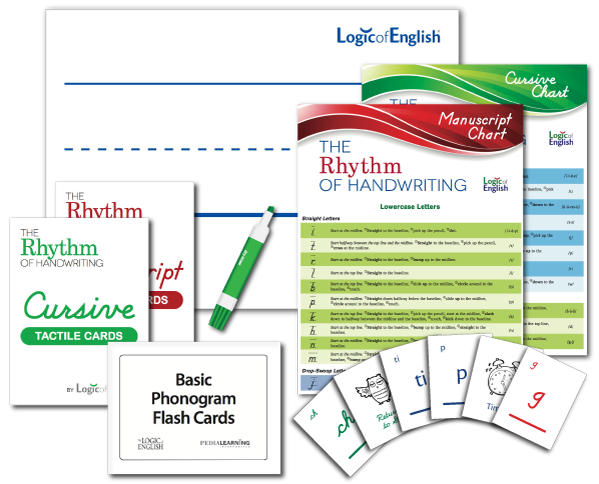
Included in the set you will find: Rhythm of Handwriting Student Book, Handwriting Tactile Cards, Rhythm of Handwriting Quick Reference, and student white board.

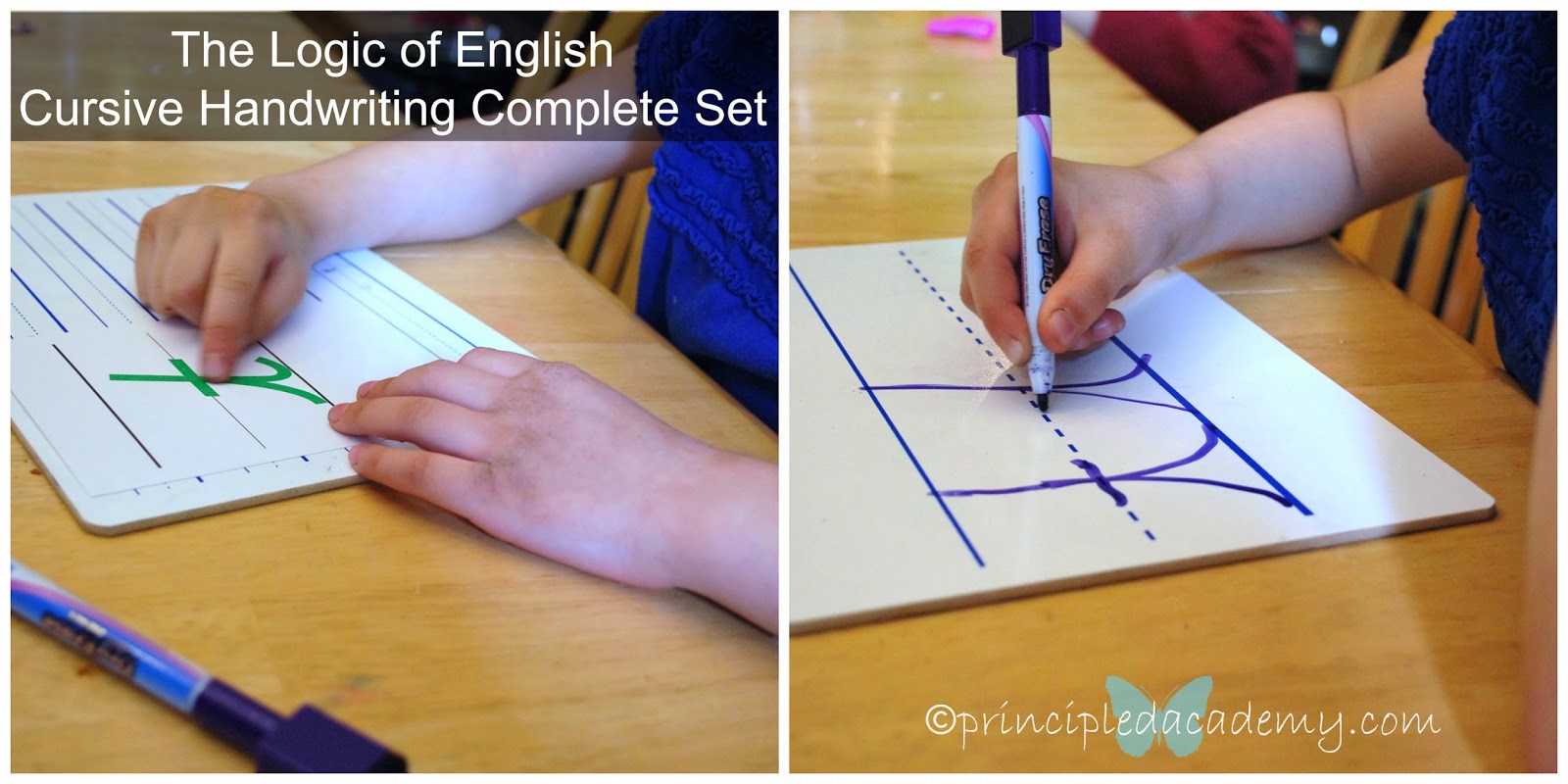
We begin with showing the flashcard for the letter we are focusing on. Next, we say the sounds of each letter (which are found on the back of the flashcard) and the students are to count the number of sounds they hear. If the students mispronounce any sounds, this is the time to help them correct their errors. Next, the parent models (with their pointer finger) the motion to write the letter while giving the directions for writing. The children are to repeat forming the letter while they say the directions aloud for about 2-3 times.


How We Used Rhythm of Handwriting Cursive Complete Set in Our Homeschool:


The curriculum encourages students to learn handwriting first. Some of the benefits of doing so are:

  • Less motor skills are needed for writing cursive,
  • The letters 'b' and 'd' are not confused as with manuscript (so it helps to eliminate letter reversals),
  • It improves long-term penmanship skills


Dreamer knows how to print and she is just now learning cursive. We begin with using the Handwriting Tactile Cards. This isn't her favorite thing to do; she personally does not like using them because she doesn't like how the texture feels on her fingers. She is more of a visual learner than a tactile learner, so she prefers to look at the letters, talk about the strokes to make each one, and then write them. She was a good sport, however, and did use the tactile cards for much of the program for this review.


The student book contains sections of letters by category (swing letters, etc.). Each letter has an example along with arrows to direct the students with the direction of each beginning stroke. We have not made it to the student book yet. Dreamer is enjoying using the white board- it's kind of a novelty for her. :-)


While she has a little ways to go with exact strokes for the letters, she has made improvements. I think that, for Dreamer, the use of the student book will be a milestone for her. It's more of a permanent record of her improved abilities- kind of like a journal to look back on.


What I Like About the Rhythm of Handwriting Cursive Complete Set


  • I love the laminated reference chart. It's perfect for quick reference- it explains how to describe the making of each letter along with the names and pictures of the different strokes. I also like that the letters are broken down into categories: swing letters, curve letters, loop letters, circle letters, slash letters, miscellaneous letters, bump letters and roll letters. In addition, there are steps found on the chart to teaching handwriting.
  • The reusable tactile cards and white board are nice aspects of this program, too. It saves on materials and then we don't have endless papers laying around or to punch and place in Dreamer's notebook. (This set does not come with white board markers or a white board eraser.)
  • The method of saying the sounds (phonemes) of the letters works really well as a reinforcement for the spelling curriculum we use.
  • The instructions are clear.
  • I love the white board! It's perfect for young children of various motor skill levels. This is from the Logic of English website about the white board:
    • 11"x16"
    • Double-sided
    • Side one - Large handwriting chart for large-motor practice
    • Side two - Six lines for writing words, phrases, sentences, and even short paragraphs
    • High quality
    • Stain resistant
    • Will not peel

How Much The Rhythm of Handwriting Cursive Complete Set  Costs


The reusable resources that come in the The Rhythm of Handwriting Cursive Complete Set 
are only $65.00.

**Please note that the Basic Phonogram Flash Cards do not come with the complete set (not sure why they are included in this graphic...). However, the cursive workbook does come with the complete set.


Connect with Logic of English


https://www.facebook.com/TheLogicOfEnglish

https://www.pinterest.com/logicofenglish/

https://www.youtube.com/logicofenglish/

https://twitter.com/LogicofEnglish


There are many helpful reviews by my TOS Crew team on this and other Logic of English products. Just click on the graphic below to read more. :-)


Blessings,


Wednesday, May 7, 2014

Review: "My Name is Handel: The Story of the Water Music" and "Mike Mulligan and His Steam Shovel" by Maestro Classics

Our family enjoys beautiful music and good stories. Through the TOS Crew, we learned about classical music for children put to stories by Maestro Classics. We received a physical copy of "My Name is Handel: The Story of the Water Music" and a physical copy of "Mike Mulligan and His Steam Shovel" in exchange for my honest review.


Who is Maestro Classics?


This is a rather new children's music series by Bonnie and Stephen Simon. These cd's for children are comprised of works for the narrator and the London Philharmonic Orchestra. They expose children to beautiful music, history, and lively stories. In addition, they help families to enjoy and understand orchestral music.


How We Used Maestro Classics in our Homeschool


As of late, we have been on the road more than usual out of necessity. It's always nice to have audio dramas to take along with us. However, it was a lot of fun to have new stories to listen to as we traveled.

My Name is Handel: The Story of the Water Music


We have listened to a couple of audios about Handel, but neither were as lively as this narration. We also learned some very interesting {possible} information about the non-assuming Mr. Handel... information that one would not suspect scholars to have dug up. I know you are sitting on the edge of your seat; I hear you saying, "Come on, Heather. Spill it!" Sorry. You'll just have to purchase it and find out. :-)


This particular story is created for ages 5+ but even our Sweetie Pie at 4 years old and Super Busy at 2 years old were engaged listeners (and of course Cool Daddy and I enjoyed them as well). 

The narrator, Yadu, speaks very clearly and paces the story with the music. While we listened to this on the go, I think it will make for a nice story to listen to prior to bedtime because of the relaxing music and the narrator's tone- they are harmoniously soothing.

What I Like About "My Name is Handel: The Story of the Water Music"


  • The story is organized and very easy to follow.
  • The music selection is beautiful.
  • I love the history behind the Water Music. It was explained with fun words creating fantastic imagery. 
  • Our whole family enjoyed it.


What You Will Find with "My Name is Handel: The Story of the Water Music"


  • Along with the CD is a little booklet with information such as the history and background of the music, lyrics for the sing along songs, and little activities such as puzzles.
  • Facts about Orchestras
  • Terminology about musical forms and audio bits to help people listen for these examples the next time they listen to the story.
  • Interesting updated scholar facts (was Handel more than a composer, conductor and producer?)
  • Facts about King Edward.


Mike Mulligan and His Steam Shovel


This is a treasured children's story written by a mother who was inspired by her two sons as they played with their steam engine toys. This CD is created for ages 4+ but our Super Busy at 2 years of age was an engaged listener of this story as well. Needless to say, Cool Daddy and I were, too.

 
We had not heard of this story before and it is a delightful tale. I love the selection of music which the composer selected. I don't know about you, but I enjoy the bagpipes- at least in certain instances. I can't get over how I love them combined with string instruments in this story (a first taste of this ear candy for me). The use of all instruments adds another dimension to this story.


What I Like About Mike Mulligan and His Steam Shovel


  • It's inspiring to learn how the authoress was influenced by child play to write this story.
  • It's enjoyable to learn how her stories became animated with a special support team as she wrote this story. It's great for children to learn about this.
  • I like that children learn about how some people felt about steam engines transitioning out of use and existence.
  • I appreciate how the composer shares about choice instruments used for sound effects and to show emotions of the various characters.
  • Instruments are explained- such as the difference between Scottish and Irish bagpipes. Aye. That I do now.

Something I'd Like to See


Well, quite frankly, I haven't been able to think of anything! These stories are created exceptionally well, full of talent and complete. The quality is superb and professional. Considering this, I think they deserve a standing ovation!

Thank you, Maestro Classics, for the quality and creativity you have put into your products. You are an integral part of keeping breathtaking symphony music alive for future generations.


How Much These Products Cost


The Story of the Water Music is $16.98 on CD and $9.99 for an MP3 Download with printable PDF booklet. You can listen to samples and purchase it at their store, here.

Mike Mulligan and His Steam Shovel  is $16.98 on CD and $9.98 for an MP3 Download with printable PDF booklet. You can listen to samples purchase it at their store, here.

You will also find activities at their website for your children at their Maestro Classics page. And, they offer educational materials including: Maestro Classics CDs Homeschool Music Curriculum Guides; Sheet Music; Home Projects; A Journey Through Learning (Lapbooks) resource to contact and several others.

Where You Can Visit Maestro Classics


Maestro Classics CDs on facebook 

Maestro Classics on Pinterest 


I'd love for you to learn more about what Maestro Classics has to offer. Won't you please read more reviews of these and other CDs by Maestro Classics that the TOS Crew has written? Just click on the graphic below.

 
http://schoolhousereviewcrew.com/maestro-classics-review/


Blessings to you all,